Write-Up Author-Werner Crane
If you're thinking about refractive surgical treatment, you have actually likely become aware of LASIK, PRK, and SMILE. Each alternative has its own procedure and recuperation time, making them matched to various requirements. Understanding the differences can help you make an educated choice. However how do you determine which one straightens ideal with your way of life and vision goals? Let's explore each alternative and discover what could benefit you.
Recognizing LASIK: Procedure, Perk, and Recovery
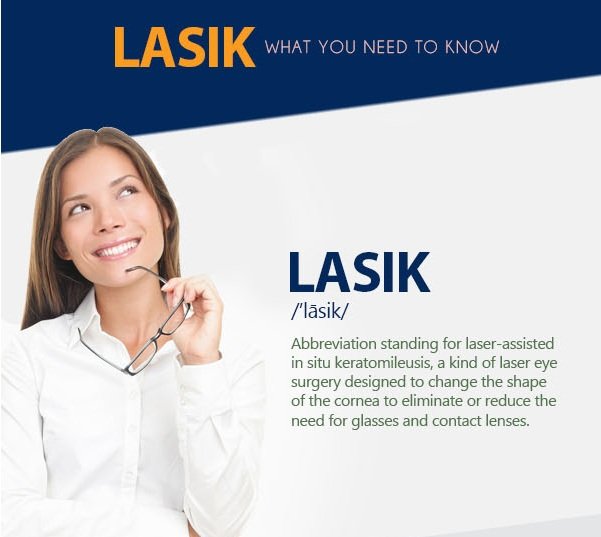
LASIK, a popular refractive surgical treatment, uses a life-changing option for those tired of glasses or calls. Throughout https://www.kens5.com/article/news/health/sa-surgeon-first-in-the-nation-to-perform-permanent-contact-lens-surgery/273-607317006 , your specialist makes use of a laser to improve the cornea, permitting light to focus appropriately on your retina. https://morningpicker.com/entertainment/kylie-jenner-and-bff-stassie-get-matching-lasik-eye-surgery-they-even-threw-an-after-party-after-the-procedure-31432/ takes around 15 minutes per eye, and many clients experience very little pain.
You'll take pleasure in more clear vision practically right away, with lots of achieving 20/25 vision or far better. The advantages of LASIK are immense-- it decreases your reliance on rehabilitative lenses and boosts your overall lifestyle.
Healing is quick; you'll likely resume regular activities within a day, though it's essential to adhere to post-operative treatment guidelines. With appropriate care, your improved vision can last for several years, making LASIK a worthwhile financial investment in your view.
Exploring PRK: Just How It Functions and What to Expect
If you're considering refractive surgical treatment, PRK (Photorefractive Keratectomy) is an additional exceptional alternative.
During the PRK treatment, your specialist removes the external layer of the cornea to reshape the underlying cells utilizing a laser. This process corrects nearsightedness, farsightedness, and astigmatism. Unlike LASIK, there's no corneal flap produced, making PRK ideal for those with thinner corneas.
After the surgery, you'll require to take care of some pain and follow-up care as the surface layer heals. Vision improvement typically takes place progressively over a few days to weeks.
It's essential to abide by your medical professional's post-operative directions for optimal recuperation. Overall, PRK provides a risk-free and reliable means to achieve clearer vision, particularly for clients that mightn't get approved for LASIK.
The SMILE Method: Advantages and Considerations
One more cutting-edge option in the realm of refractive surgical procedure is the SMILE method (Little Cut Lenticule Removal). This minimally intrusive treatment includes producing a tiny incision to get rid of a lenticule of tissue from your cornea, improving it to fix vision.
One major advantage of SMILE is its conservation of corneal integrity, which might lead to less completely dry eye contrasted to LASIK. You'll also experience a quicker recuperation time and marginal discomfort.
Nonetheless, it's vital to think about that SMILE might not be suitable for every person, particularly those with serious refractive errors or specific corneal conditions. Consulting with your eye treatment expert can aid establish if SMILE straightens with your vision adjustment goals and total eye health.
Verdict
In selecting the ideal refractive surgical treatment for you, it's essential to evaluate the benefits and factors to consider of LASIK, PRK, and SMILE. Each alternative provides distinct advantages customized to your specific needs, whether you focus on fast healing or have certain corneal conditions. By seeking advice from your eye treatment specialist, you can make an educated decision that ideal suits your vision goals and way of life. Keep in mind, the right selection can lead to clearer vision and a more satisfying life.